
Introduction
In Department 33 of France, cyclists' safety is more than just a concern; it has become a crucial public policy issue. With a total of 2,449 recorded accidents, these incidents are not just statistics, but individual stories demanding concrete action.
Context of the Bike Plan in France
The Bike Plan, initiated by the French government in 2018, aims to promote the use of bicycles as a daily means of transportation and to improve the safety of cyclists across the country. In the Gironde region, this plan has been translated into a series of initiatives and investments in cycling infrastructure, making Department 33 a conducive ground for evaluating the impact of such measures on road safety.
The State of Cyclist Safety
Bicycle accidents in this region present an alarming severity, with a statistical mode set to class 4, the most severe. This exacerbated severity is not uniformly distributed across all age groups. The average age of those involved is 36.8 years, with a median of 33 years, but the variability is large, as evidenced by a standard deviation of nearly 20 years. The mode of this distribution is 18 years, highlighting that young adults are particularly at risk.

The Role of Infrastructure
Statistical analysis reveals a notable correlation between the age of the victims and the severity of the accidents. This relationship is supported by measures of residual variance, and a correlation coefficient close to zero. These results suggest that age is not an independent factor, but interacts significantly with the severity of incidents.
Additionally, a "Chi-Squared" test shows a result of 59.99, highlighting a substantial dependence between the severity of accidents and the quality of cycling infrastructure.
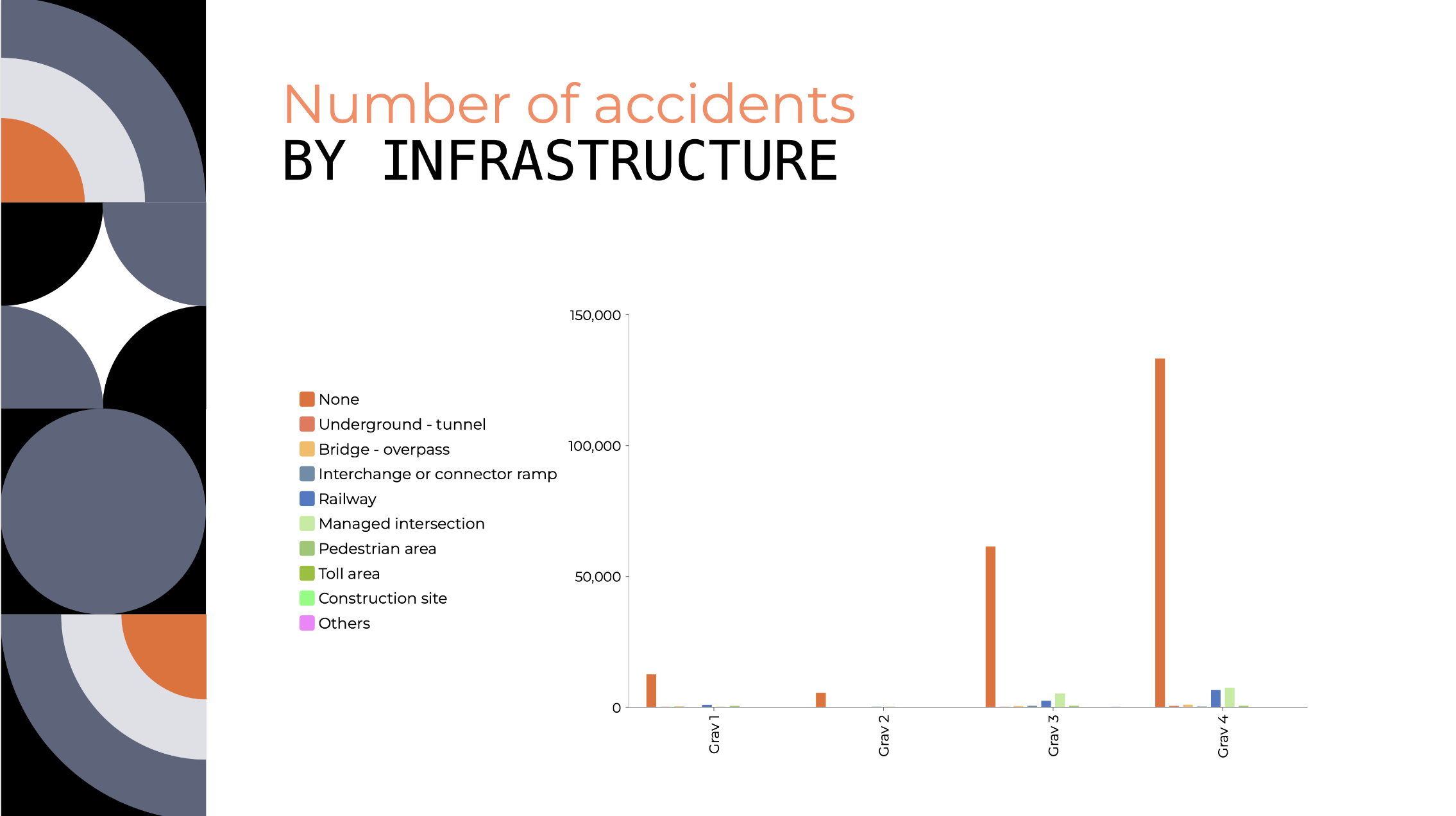
This confluence of statistical evidence underscores the crucial importance of designing cycling infrastructure that takes into account the specific needs of different age groups to effectively reduce the severity of accidents.
The Impact of the Bike Plan: An Encouraging Trend
Since the adoption of the Bike Plan in 2018, Department 33 has recorded a remarkable decrease in the number of bicycle accidents. The data illustrates this success: from 84 accidents recorded in 2017, this figure drastically dropped to 44 in 2018, reaching a low of 20 in 2020 due to Covid-19, before a slight increase to 37 in 2021. This decrease, corresponding to a reduction of over 50% of incidents since the plan's implementation, attests to the effectiveness of the measures taken.
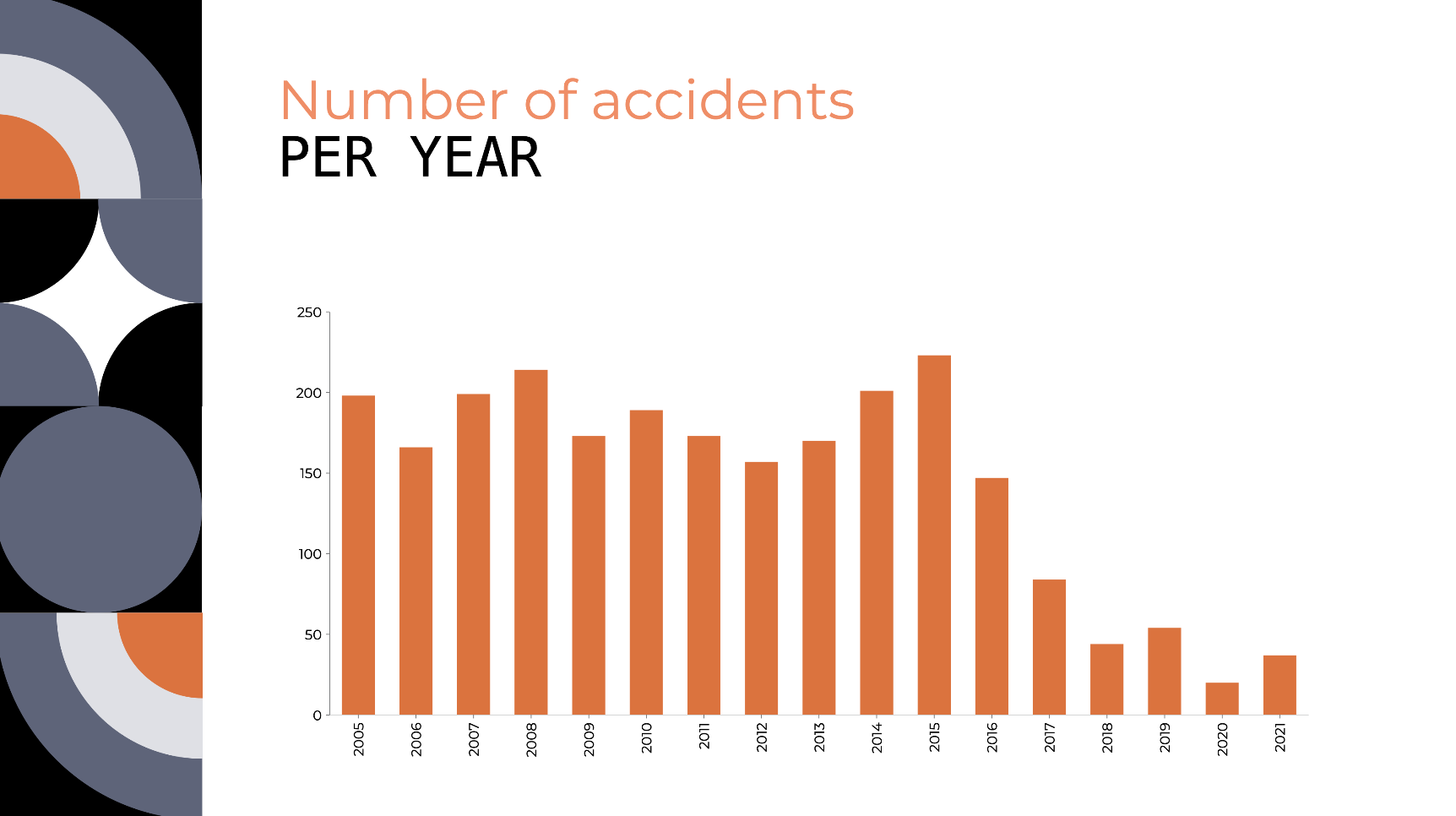
This finding is all the more impressive considering that cycling is gaining popularity in France. According to data from www.notre-environnement.gouv.fr/, nearly 150,000 French people have traded their car for a bicycle since 2015.
The reduction in accidents and the increase in bicycle adoption not only underscore the effectiveness of the Bike Plan, but also its potential role as a model for safer and more sustainable urban mobility.
Conclusion
The Bike Plan has demonstrated its effectiveness in reducing bicycle accidents in Department 33, validated by robust empirical data. However, the existence of specifically vulnerable age groups and high levels of severity suggest that there is still room for improvement.